← All episodes
6C
Thalidomide, Drug Approvals, and Chirality
Synopsis
Thalidomide is among the most notorious drug failures. Used to diminish the effects of morning sickness, it caused thousands of birth deformities before being banned throughout the world.
However, tests on men and non-pregnant women identified that thalidomide could effectively treat Hansen’s disease and some cancers. Bringing thalidomide back to market involved establishing careful protocols that have now been extended to more than 65 other drugs.
The recent determination of how thalidomide causes birth defects uncovered the concept of molecular glues, which are now being explored as possible drugs for diseases previously considered undruggable. Thalidomide truly has a Schizophrenic Career.
Chemists
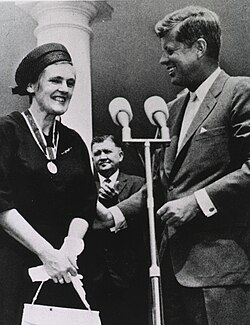
With President John F. Kennedy
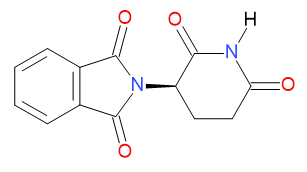
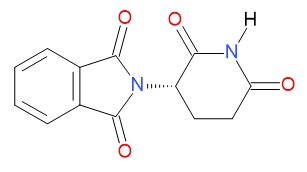
Compounds in this episode
Bibliography
- 1Daemmrich, A. "A Tale of Two Experts: Thalidomide and Political Engagement in the United States and West Germany," Social History of Medicine 2002, 15, 137-158. Source
- 2Dally, A. "Thalidomide: was the tragedy preventable?," The Lancet 1998, 351, 1197-1199. Source
- 3Eriksson, T.; Bjöurkman, S.; Roth, B.; Fyge, Å.; Höuglund, P. "Stereospecific determination, chiral inversion in vitro and pharmacokinetics in humans of the enantiomers of thalidomide," Chirality 1995, 7, 44-52. Source
- 4Franks, M. E.; Macpherson, G. R.; Figg, W. D. "Thalidomide," The Lancet 2004, 363, 1802-1811. Source
- 5Fraser, F. C. "Of mice and children: Reminiscences of a teratogeneticist," American Journal of Medical Genetics Part A 2008, 146A, 2179-2202. Source
- 6Hancu, G.; Modroiu, A. "Chiral Switch: Between Therapeutical Benefit and Marketing Strategy," Pharmaceuticals 2022, 15, 240. Source
- 7Kelsey, F. O. "Thalidomide update: Regulatory aspects," Teratology 1988, 38, 221-226. Source
- 8Kim, J. H.; Scialli, A. R. "Thalidomide: The Tragedy of Birth Defects and the Effective Treatment of Disease," Toxicological Sciences 2011, 122, 1-6. Source
- 9Kumar, H.; Venkatachalapathy, M.; Sistla, R.; Poongavanam, V. "Advances in molecular glues: exploring chemical space and design principles for targeted protein degradation," Drug Discovery Today 2024, 29, 104205. Source
- 10Martin, A.; Holloway, K. "'Something there is that doesn't love a wall': Histories of the placental barrier," Studies in History and Philosophy of Science Part C 2014, 47, 300-310. Source
- 11Rehman, W.; Arfons, L. M.; Lazarus, H. M. "The rise, fall and subsequent triumph of thalidomide: lessons learned in drug development," Therapeutic Advances in Hematology 2011, 2, 291-308. Source
- 12Scheindlin, S. "The Courage of One's Convictions: The Due Diligence of Frances Oldham Kelsey at the FDA," Molecular Interventions 2011, 11, 3-9. Source
- 13Silverman, W. A. "The Schizophrenic Career of a "Monster Drug"," Pediatrics 2002, 110, 404-406. Source
- 14Tokunaga, E.; Yamamoto, T.; Ito, E.; Shibata, N. "Understanding the Thalidomide Chirality in Biological Processes by the Self-disproportionation of Enantiomers," Scientific Reports 2018, 8, 17131. Source
- 15Turner, J. R. "The 50th Anniversary of the Kefauver-Harris Amendments: Efficacy Assessment and the Randomized Clinical Trial," J. Clinical Hypertension 2012, 14, 810-815. Source
- 16Vargesson, N. "Thalidomide-induced limb defects: resolving a 50-year-old puzzle," BioEssays 2009, 31, 1327-1336. Source
- 17Vargesson, N. "Thalidomide-induced teratogenesis: History and mechanisms," Birth Defects Research Part C: Embryo Today: Reviews 2015, 105, 140-156. Source
- 18Vargesson, N.; Stephens, T. "Thalidomide: history, withdrawal, renaissance, and safety concerns," Expert Opinion on Drug Safety 2021, 20, 1455-1457. Source
- 19Yamamoto, J.; Ito, T.; Yamaguchi, Y.; Handa, H. "Discovery of CRBN as a target of thalidomide: a breakthrough for progress in the development of protein degraders," Chemical Society Reviews 2022, 51, 6234-6250. Source